


















Hair loss during pregnancy and postpartum
Summary
Hair loss during pregnancy: the most common causes
During pregnancy, the expectant mother's body goes through a period of great physical and hormonal changes. These changes affect the hair life cycle, which is strongly influenced by estrogen.
In many women, hormonal changes during pregnancy prolong the hair growth phase (anagen phase). The result is often magnificent hair that is denser and shinier [1].
It should be noted, however, that hair beauty can evolve throughout pregnancy and depend on individual characteristics.
However, certain factors can contribute to hair loss during pregnancy:
-
Significant fatigue, especially during the first trimester.
-
Iron deficiency, as needs are increased during this period.
-
Physiological stress related to bodily changes.
-
Changes in the scalp (dryness, hypersensitivity).
In pregnant women, hair loss is diffuse and generally moderate. It differs from alopecia of genetic or chronic hormonal origin, which affects both women and men and is based on different mechanisms [2].
To understand female alopecia and how to treat it, please refer to our dedicated article.
Postpartum hair loss: the most common causes
After childbirth, hair loss frequently occurs between 2 and 4 months after birth. This is called telogen effluvium.
Telogen effluvium is a transient physiological phenomenon linked to hormonal changes. The sudden drop in hormones after childbirth causes a large number of hairs to simultaneously enter the resting and shedding phase (telogen phase).
Several factors can accentuate this postpartum hair loss:
-
Fatigue related to the first months with the baby.
-
Breastfeeding: studies show that prolonged breastfeeding promotes hair loss [3].
-
Depleted iron reserves after pregnancy.
-
Physical and emotional stress.
-
Insufficient sleep.
But beware: while this hair loss may seem alarming, it does not reflect the death of the hair follicles. The hair grows back afterward!
Laboratoire Dermatologique ACM has strived to understand the different causes of hair loss during and after pregnancy. Identifying the biological mechanisms allows us to develop dermocosmetic solutions for hair loss that are concrete, effective, and respectful of this particular period.
How to stimulate hair regrowth after pregnancy?
Hair regrowth after telogen effluvium is gradual. It primarily relies on respecting the natural hair cycle, which spans several months.
To support this phenomenon, here are some good practices:
-
Support the scalp daily with gentle cleansing products, or those specifically for "fragile hair" or "diffuse hair loss."
-
Perform scalp massages: by stimulating cutaneous microcirculation, massage promotes exchanges at the hair follicle level, a factor in hair growth.
-
Adapt your care routine to preserve your hair capital: during regrowth, new hair is fragile. It requires special attention. Thus, limit the use of heating tools, avoid overly tight hairstyles, and prefer detangling treatments to preserve existing hair fibers.
-
Pay attention to your nutritional intake: pregnancy, childbirth, and breastfeeding draw on the mother's nutrient reserves. It is therefore essential to adopt a varied and balanced diet, rich in essential nutrients for hair (iron, zinc, magnesium, B vitamins, etc.) [4].
It is to support expectant and new mothers that Laboratoire Dermatologique ACM has designed the Novophane dermocosmetic solutions, intended for hair loss:
-
Novophane Reactional is a lotion specially designed to slow down reactive hair loss, such as that occurring during pregnancy or postpartum.
-
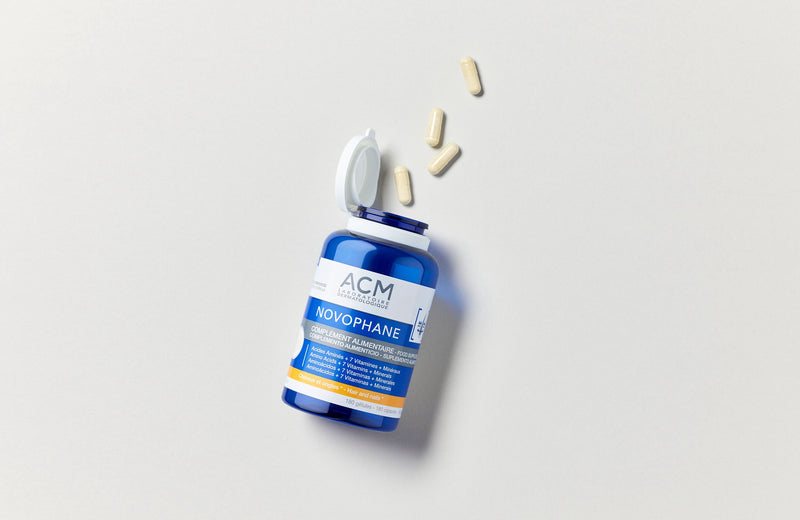
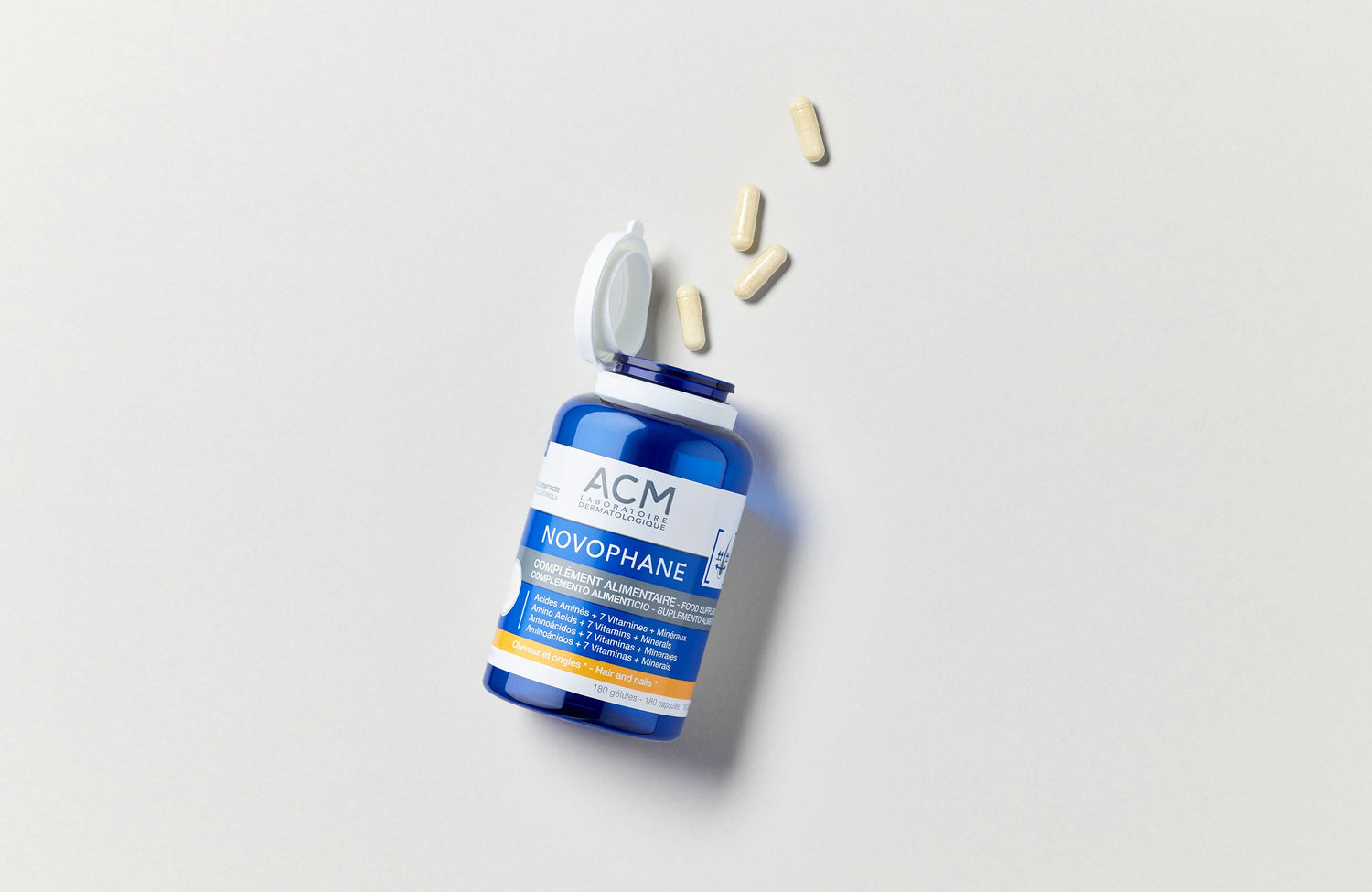
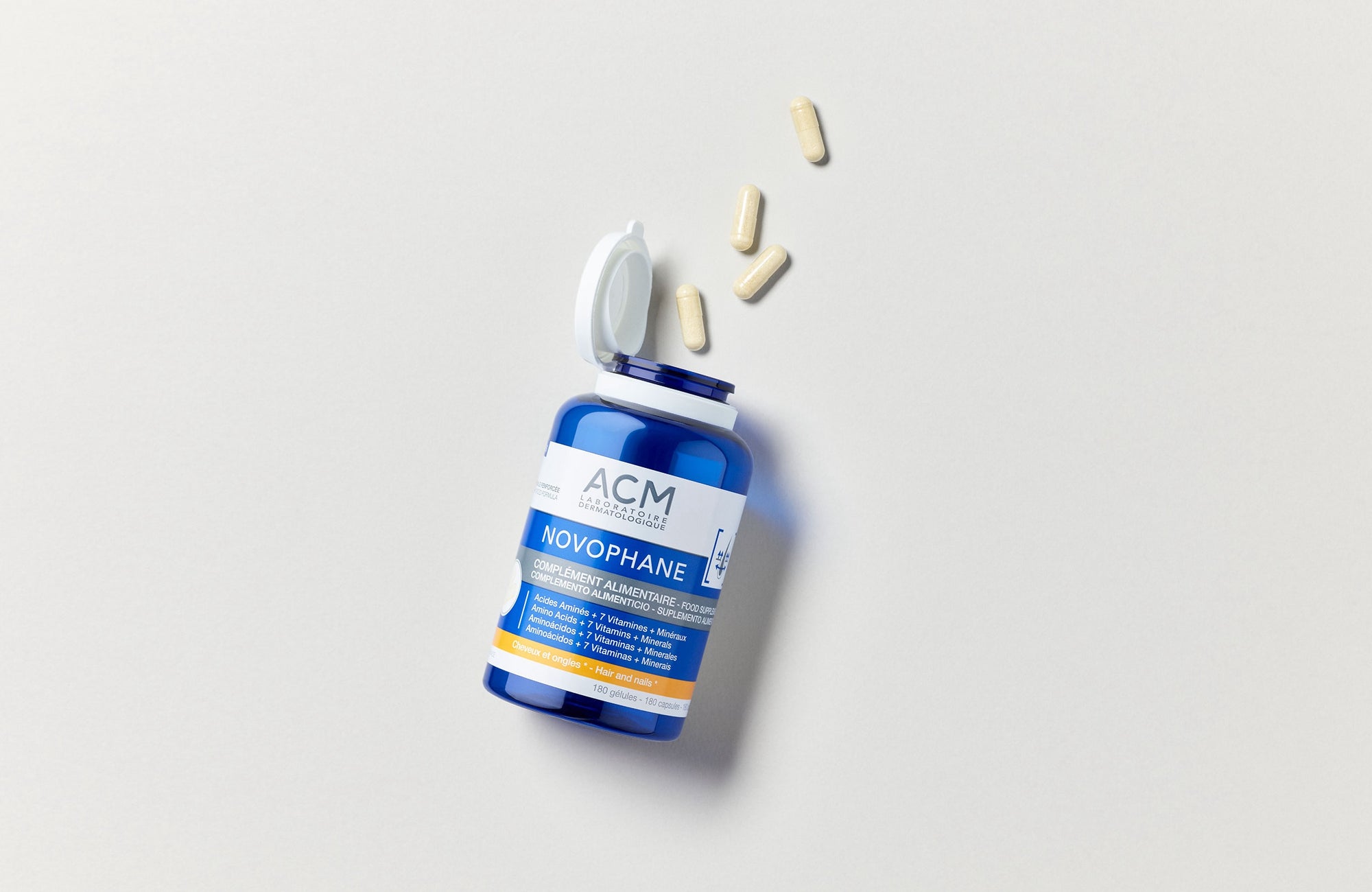
Novophane Capsules targets hair loss during pregnancy and postpartum by increasing the anagen (hair growth) / telogen (resting phase) ratio (+35% after 3 months) [A].
How to prevent hair loss after childbirth?
Completely preventing hair loss after childbirth is not possible: it is a natural phenomenon linked to hormonal changes.
However, it is possible to limit aggravating factors with a few preventive measures:
-
Take care of nutrition and rest: the postpartum period often means significant fatigue, so it is essential to maintain as balanced a lifestyle as possible.
-
Limit overly tight hairstyles that exert mechanical stress on the hair root.
-
Avoid using heating tools that weaken the hair fiber.
Sensitive to the impact of this period on the well-being of expectant and new mothers, Laboratoire Dermatologique ACM has strived to understand the different causes of hair loss related to pregnancy and postpartum. This rigorous scientific approach makes it possible to elucidate the biological mechanisms involved and to develop appropriate dermocosmetic treatments that respect the scalp and the specific needs of this period, with a constant objective: to support women with efficiency, safety, and gentleness, and to contribute sustainably to their comfort.
Frequently asked questions:
How long does postpartum hair loss last?
Postpartum hair loss generally begins between the 2nd and 4th month after childbirth and can last for several months. In most cases, regrowth is gradually observed during the first year after birth, depending on the natural hair cycle.
What is telogen effluvium?
Telogen effluvium is diffuse and transient hair loss linked to a shift in the hair cycle. A large number of hairs simultaneously enter the resting and shedding phase (telogen) before falling out. This phenomenon generally occurs after a physiological event, such as pregnancy or a period of intense fatigue.
Sources
Nous vous recommandons notre gamme NOVOPHANE


Read also
Niacinamide (vitamine B3) : comment agit-elle sur la peau et pour qui ?
Taches de vieillesse (lentigos séniles) : causes et solutions pour les atténuer