















Free shipping for orders over 40€

 
Your needs
Our dermatological solutions
Choose a language
Cart
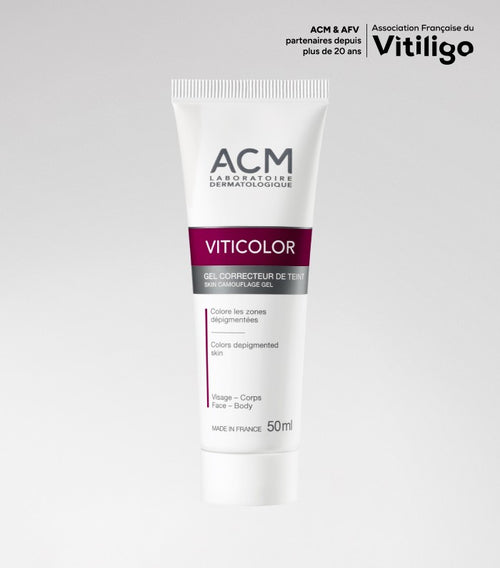
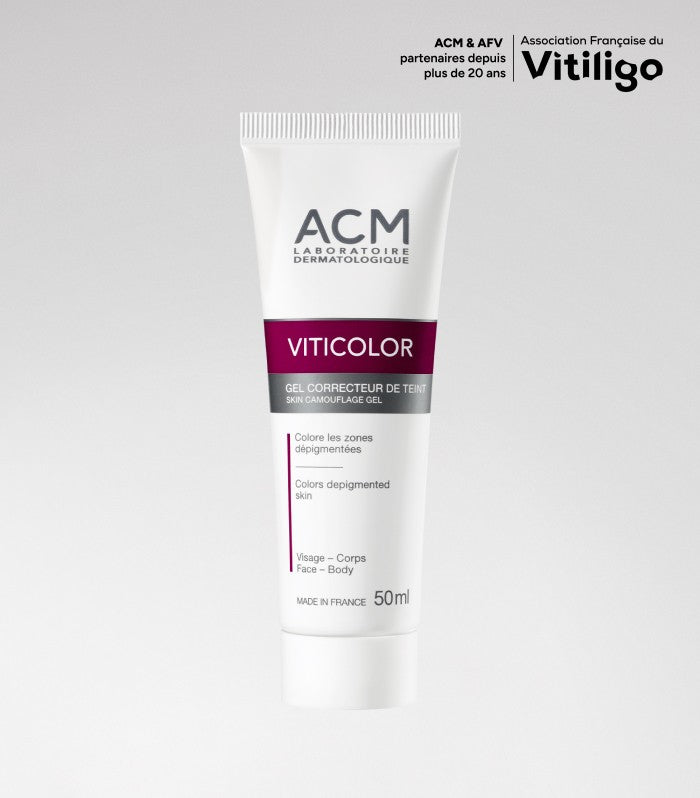
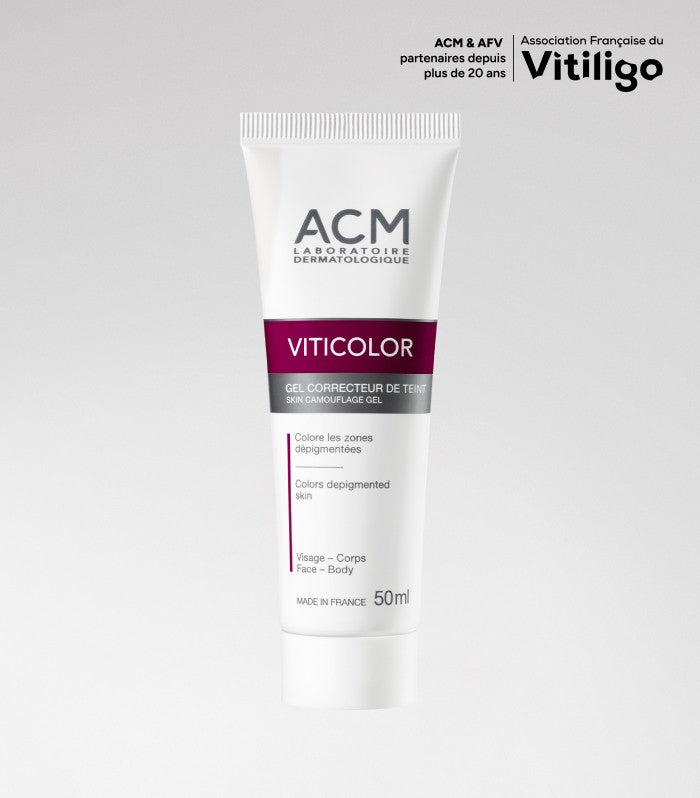
Viticolor complexion correcting gel
Vitix - Depigmentation, vitiligo

Viticolor complexion correcting gel

33 Reviews
25,50€
Corrected

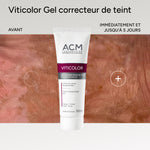
Viticolor Complexion Correcting Gel has been formulated to provide aesthetic and long-lasting coloring to people with Vitiligo. Viticolor Complexion Correcting Gel helps to permanently camouflage areas of depigmentation. It leaves a natural and aesthetic coloring that can last from 3 to 5 days. Viticolor Complexion Correcting Gel has a tinted texture that allows it to be applied precisely to depigmented areas. Aesthetically camouflages areas of depigmentation.

Ideal for: Vitiliginous skin
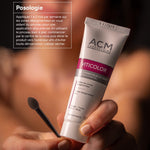
Texture: Fluid tinted gel is easy to work with thanks to the applicator brush provided with the product.
When?: 1 to 2 times/week

Find out more

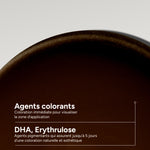
Viticolor Complexion Correcting Gel combines 2 pigmenting agents (DHA + Erythrulose), with synergistic action, to give an aesthetic and long-lasting coloring (3 to 5 days) to depigmented skin. DHA has good skin tolerance.

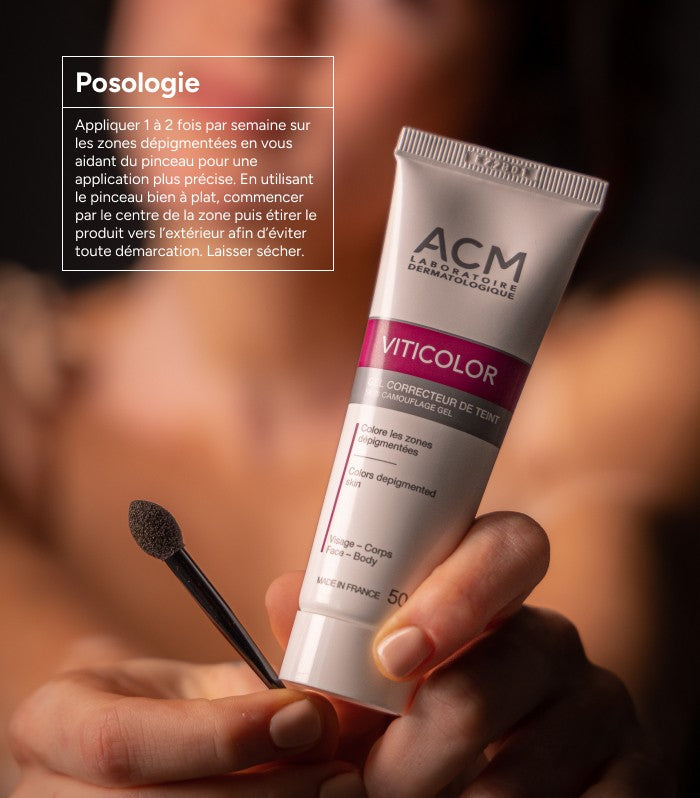
Thanks to its tinted texture and the applicator brush provided with the product, Viticolor gel can be used precisely and locally on the skin. The result is natural and adjustable: if the shade obtained is not dark enough, it is possible to repeat the application until the desired color is obtained. Subsequently, 1 or 2 applications per week are sufficient to maintain the correction.

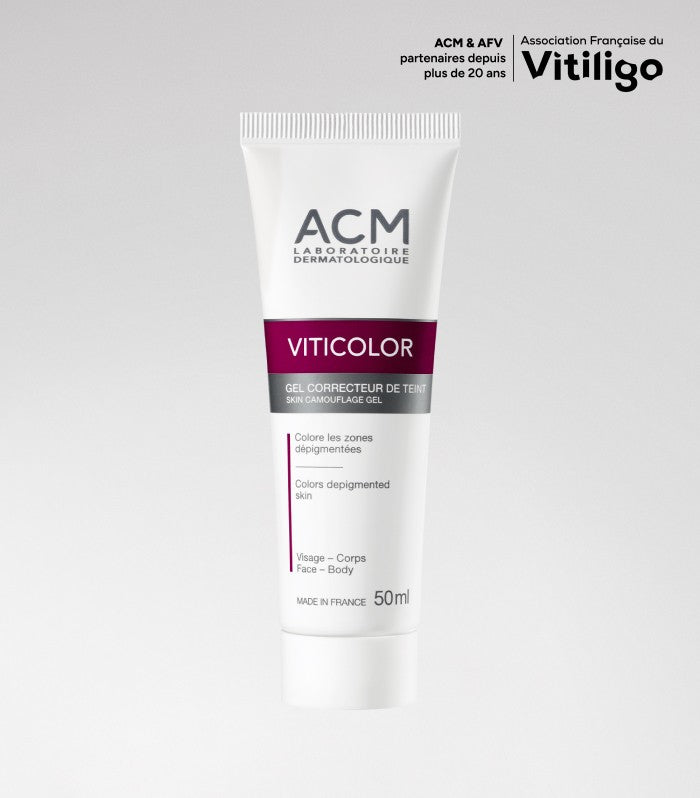
Viticolor complexion correcting gel Viticolor complexion correcting gel Viticolor complexion correcting gel Viticolor complexion correcting gel
Capacity

Free shipping

on orders over €40 (metropolitan France)

Customer Service

Monday to Friday, 9:30 a.m. to 6:00 p.m.
hello@labo-acm.com

Payment in 3 installments

with Alma

BENEFITS

Viticolor Complexion Correcting Gel helps to permanently conceal areas of depigmentation. It leaves a natural and aesthetic coloring that can last from 3 to 5 days.

ACTIVE INGREDIENTS

  • Patented plant extract
    This patented melon extract is concentrated in Catalase and SOD to improve the physiological balance of free radicals and protect cells against oxidative stress known to be the cause of Vitiligo. SOD is the most powerful primary antioxidant known, its effectiveness is enhanced by the presence of Catalase.
More about +

COMPOSITION

Aqua (Water), Butylene Glycol, Dihydroxyacetone, Alcohol Denat., Sodium Polyacryloyldimethyl Taurate, Hydrogenated Polydecene, Erythrulose, Citric Acid, Trideceth-10, CI 42090 (Blue 1), CI 19140 (Yellow 5), CI 14700 (Red 4), Chlorphenesin, Phenoxyethanol, O-Cymen-5-ol, Tetrasodium EDTA.

HOW TO USE IT

With the brush flat, start applying Viticolor in the center of the depigmented area, then stretch the product outward to avoid any demarcation. Let dry.

If 8 hours later you find that the color is too light, you can repeat the application.

Subsequently, 1 to 2 applications per week are sufficient to maintain the colour obtained.

For use during a period of UVB phototherapy treatment, seek the advice of your doctor.

Medical DNA from the Laboratory

Our integrated approach makes ACM a medical reference, driven by the trust of its partners, from the Laboratory to the point of prescription.

At ACM, each dermatological solution (topical or oral) is born from close collaboration with medical experts – dermatologists, biologists and chemists – guaranteeing scientific and pharmaceutical rigor, from formulation to packaging.
This collaboration is based on a strong bond with doctors, reinforced by active listening to patients to meet their specific needs.

Our solutions, distributed exclusively in pharmacies, are the result of a privileged partnership with pharmacists, true players in local healthcare.
Finally, our uncompromising formulation charter ensures effective, safe products suitable for all skin types and phototypes, supported by in-depth clinical studies.

FAQ

Our recommendations