

















Which hair loss and hair strengthening supplements?
Summary
When should you take hair supplements?
Hair loss and hair fragility are multifaceted phenomena. They can be diffuse, seasonal, reactive or part of a more long-term context [1].
It is estimated that 80% of men and 50% of women will experience a significant episode of hair loss in their lifetime.
Hair supplements can then be considered in certain cases:
- Diffuse or reactive hair loss: during periods of physical or emotional stress, intense fatigue, infectious episodes, hormonal changes (postpartum, stopping contraception) or seasonal changes.
- Dry, brittle, or fragile hair: reflecting an alteration of the hair fiber with poorer keratin synthesis.
- A decrease in hair density: without alopecia being diagnosed, less dense hair can be linked to disruptions in the hair cycle (slowing of renewal, shortened growth phase).
- A diet that does not sufficiently cover the hair's nutritional needs : vitamins, minerals and amino acids.
In these situations, the goal is not to "treat" a pathology, but to support hair metabolism, by providing nutrients involved in the synthesis of keratin, the major constituent protein of hair, in growth and in the normal functioning of the hair follicle.
Key active ingredients in hair supplements
Here are the main essential nutrients for hair growth and maintenance [2] [3] :
Biotin (Vitamin B8)
Biotin participates in energy metabolism and contributes to the maintenance of normal hair. It supports the quality of the hair fiber, especially in cases of fragility or brittle hair.
Vitamins B5 and B6
B5 contributes to normal energy metabolism, while B6 contributes to the normal metabolism of proteins, such as keratin, necessary for hair growth.
Vitamin C:
By contributing to the normal formation of collagen, it helps strengthen the scalp, the anchoring tissue and support for the hair follicle.
Cystine and Methionine
These two sulfur-containing amino acids are building blocks of keratin, contributing to the mechanical resistance of hair and a more robust fiber. They are particularly interesting in cases of reactive hair loss.
Iron
Iron is involved in three factors for good hair health. It contributes to normal energy metabolism and the normal transport of oxygen in tissues. It also plays a role in the cell division process.
Zinc
Zinc contributes to the maintenance of normal hair by participating in cell division and the renewal of the hair follicle. A zinc deficiency can lead to diffuse hair loss or weakening of the hair fiber.
Silicon, Horsetail extract and copper
Silicon, which is abundant in Horsetail extract, is recognized for its role in the structure of the hair fiber, while copper contributes to the normal pigmentation of hair and its protection against oxidative stress.
Presentation of the Novophane range
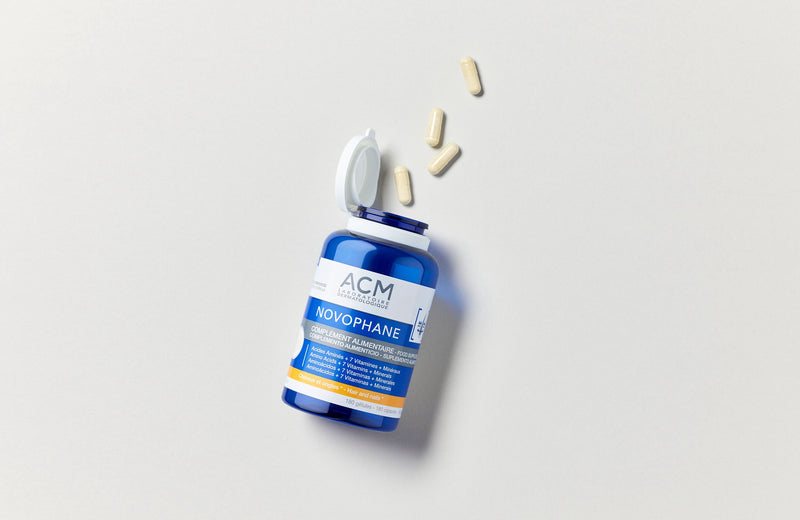
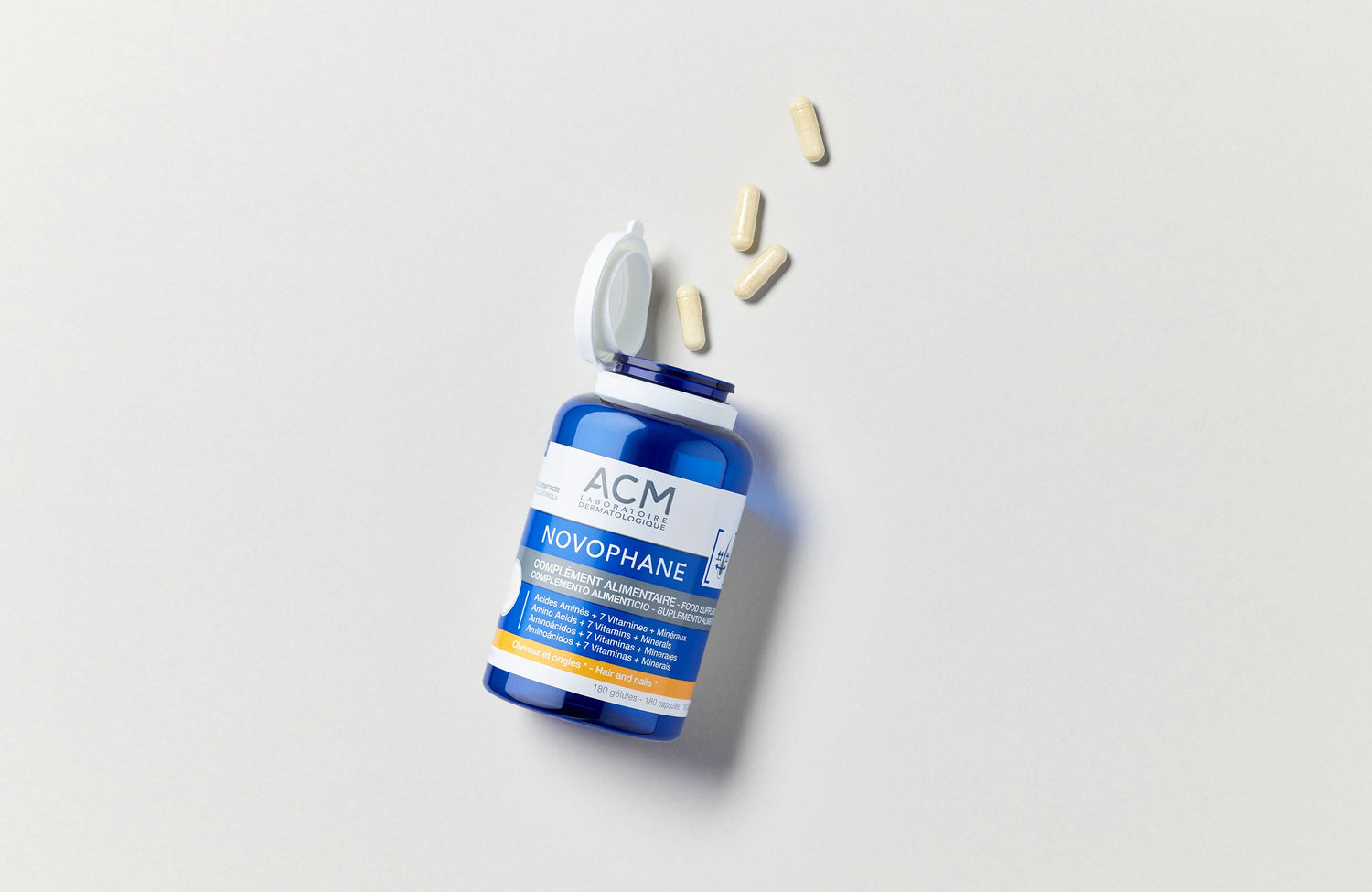
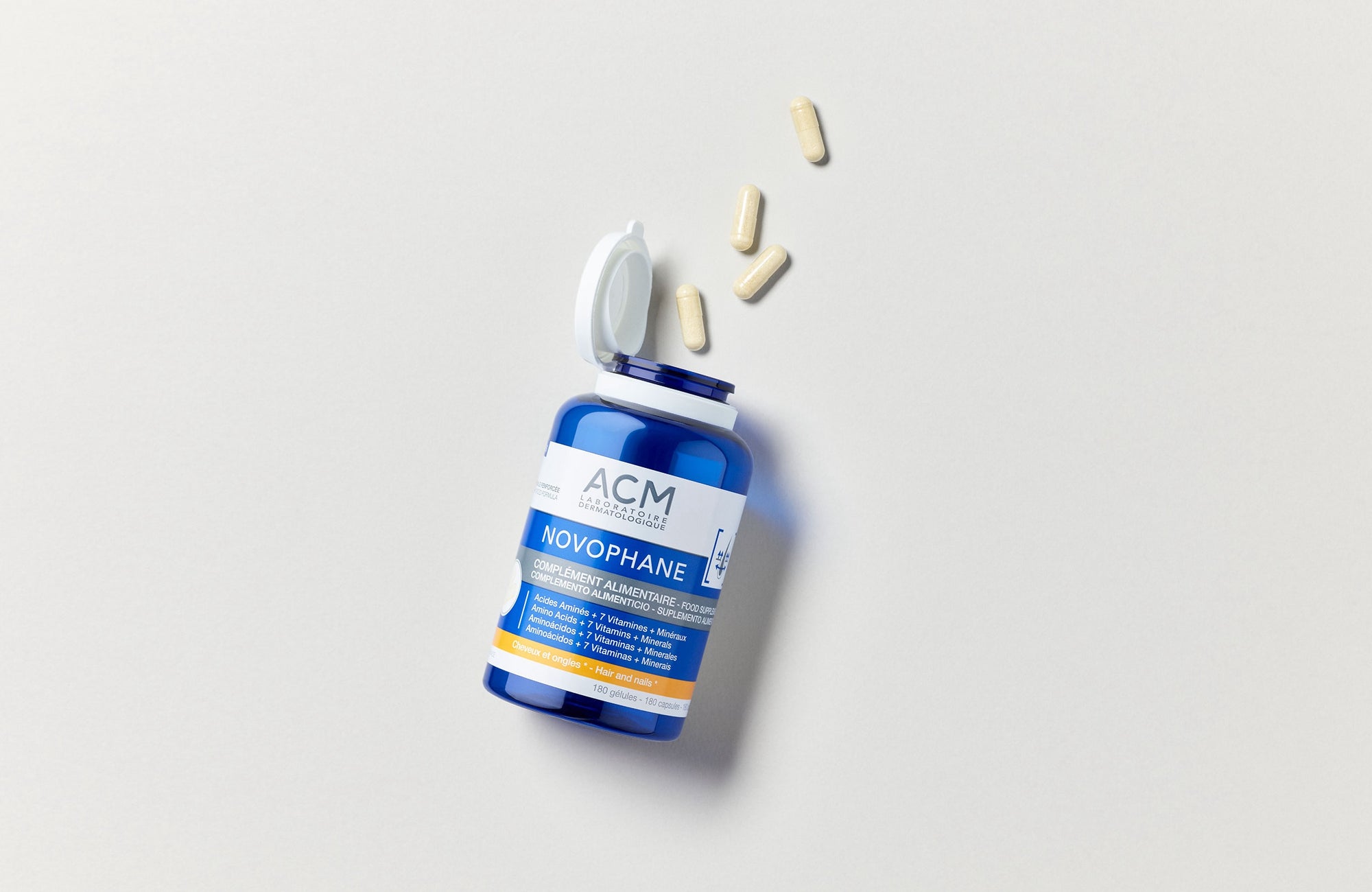
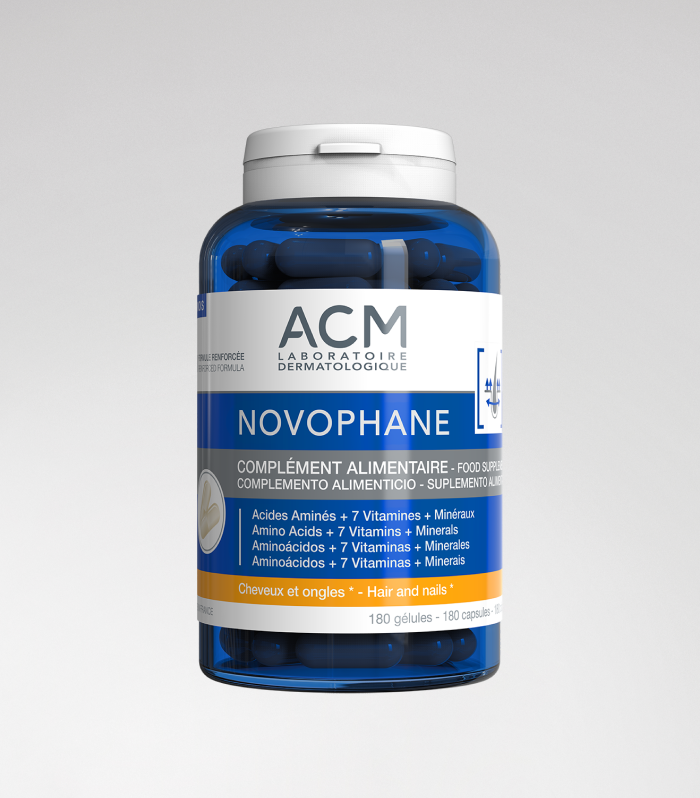
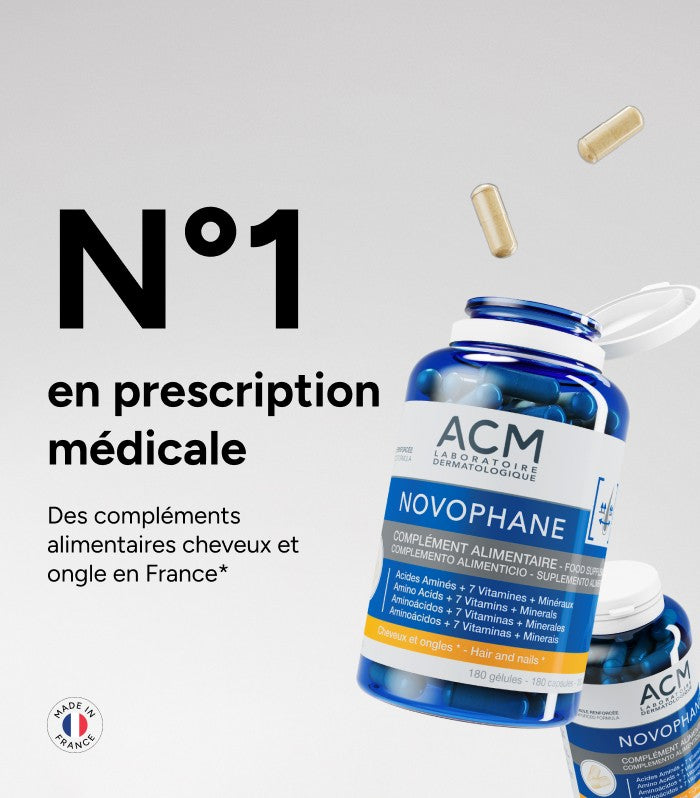
The Novophane range developed by Laboratoire ACM is dedicated to hair and nail health.
Novophane food supplements target the various factors of hair loss and weakening from within.
They combine vitamins, minerals, amino acids and plant extracts, such as horsetail extract, selected for their recognized role in the maintenance of normal hair.
The effectiveness of Novophane capsules was evaluated in a clinical study. After 12 weeks of daily intake, a significant improvement in the anagen (hair in growth phase) / telogen (hair in resting phase) ratio was observed (+35%). In total, 94% of users reported their hair was strengthened, and 100% were satisfied with its overall condition.
How to take hair supplements? And for how long?
Hair growth is a slow process, punctuated by the hair's biological cycle. A course of food supplements is generally planned for a minimum duration of 3 months, in line with this cycle.
In certain situations of persistent weakening or hair loss, the course can be renewed or prolonged, in compliance with usage recommendations or the advice of a healthcare professional.
Here are some best practices to remember:
- Respect the dosage indicated on the product. It is generally unnecessary, even counterproductive, to overdose.
- Prefer daily and regular intake, at the time of day that suits you best, ideally during a meal for better tolerance.
-
Integrate your supplementation into a global approach with:
- A balanced diet rich in proteins, vitamins, and minerals.
- Hair care adapted to your hair type and scalp.
- Attention to stress and fatigue, known to impact hair health.
Finally, if in doubt, in case of intense, prolonged, or associated with other symptoms, seek medical or pharmaceutical advice.
Frequently asked questions:
Which vitamin am I lacking if I'm losing my hair?
Hair loss can be associated with insufficient intake of certain B vitamins, such as biotin (vitamin B8) or vitamins B5 and B6, as well as zinc. A healthcare professional can help you assess a possible deficiency and recommend appropriate supplementation.
What are the best foods for hair loss?
A varied diet providing proteins, vitamins, and minerals is essential for maintaining healthy and strong hair: fish, eggs, legumes, nuts, whole grains, and green vegetables contribute to the proper functioning of hair metabolism.
What deficiency causes dry hair?
Dry hair can be linked to insufficient intake of essential fatty acids (omega-3), B vitamins, or zinc. Other non-nutritional factors can also be involved, such as mechanical damage (friction, wearing a hat...) or environmental factors (dry atmosphere, sun, high temperatures...).
Sources
we recommend the Novophane range


Read also

Rétinol : guide complet pour l'intégrer dans sa routine sans erreur
AHA 5 %, 10 %, 15 % : concentration et objectif